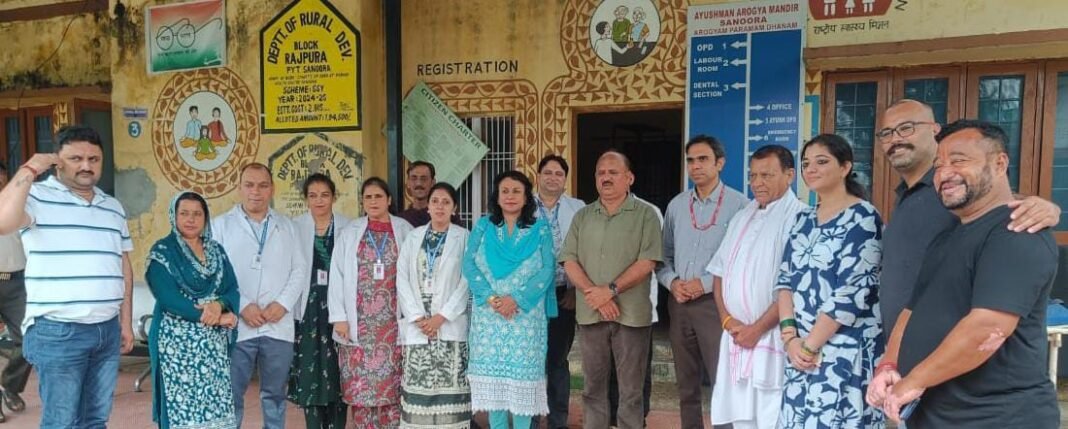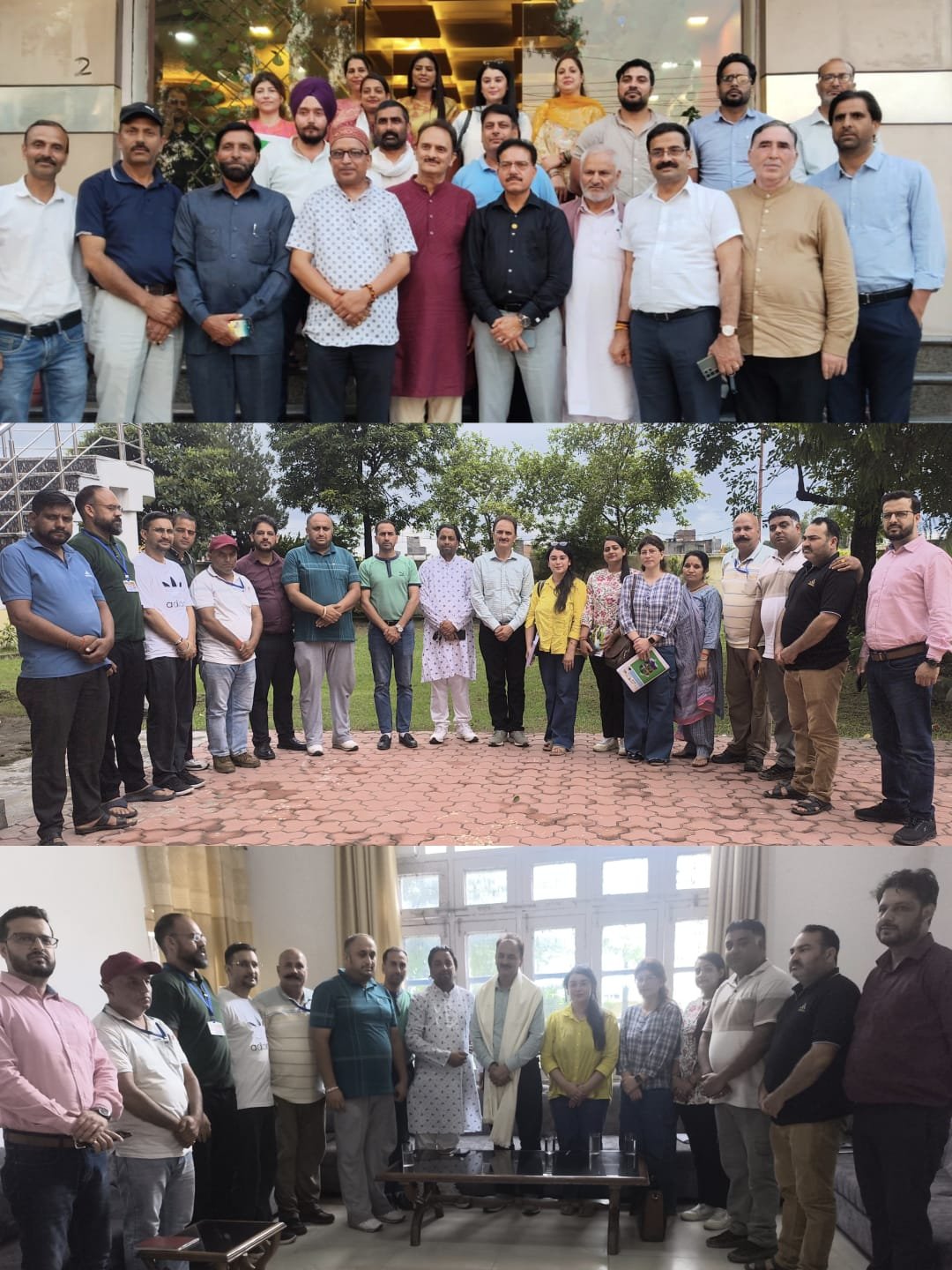
JAMMU : As part of an ICSSR-sponsored research study led by Prof. Arvind Jasrotia, Department of Law, University of Jammu, a series of in-depth Focus Group Discussions (FGDs) were conducted across Rajouri district to holistically examine the lived realities of marginalized communities through immersive, context-sensitive methodologies. The research employed deep FGD techniques including stratified participant engagement with civil society representatives, NGOs, local leaders, and marginalized community voices to capture intersectional perspectives from tribal populations, women, and displaced persons from Pakistan-occupied Jammu & Kashmir (PoJK).
Facilitators anchored discussions in community spaces across Thanamandi, Darhal, Rajouri town, Nowshera, and Sunderbani, utilizing semi-structured guides with emergent probing to explore embodied experiences of marginalization, local interpretations of policy accessibility/effectiveness, pre/post-constitutional reforms scenario, and socio-bureaucratic barriers.
Over a three-day immersive fieldwork period, the team documented non-verbal cues, in-situ vernacular expressions, and participant-driven policy gap prioritization, enabling co-production of knowledge on place-based vulnerabilities.
Prof. Jasrotia noted these dialogues revealed community-specific cosmologies of justice and resistance, while uncovering tacit insights into ritualized bureaucratic challenges and gendered impacts of legal ambiguities. Research Assistant and Field investigators Dr. Kartika Bakshi, Dr. Gazala Noor, Ms. Rupakshi Wazir, and Ms. Ritika Gupta ensured ethnographic rigor through reflexive notetaking, while key community interlocutors Vikrant Sharma, Abdul Qayoom Mir, Arif Jatt, Shakti Sharma, Hamid Malik, Dr. Sajjad Mir, Sabar Choudhary, Vinod Raina, Dr. Ajay Prasher, Rajesh Prasher, Sonam Sharma, Gurnam Kour, Ms. Pragati and Dr. Nitan Sharma provided emic validation of findings, strengthening the collaborative analysis of intersectional marginalization.