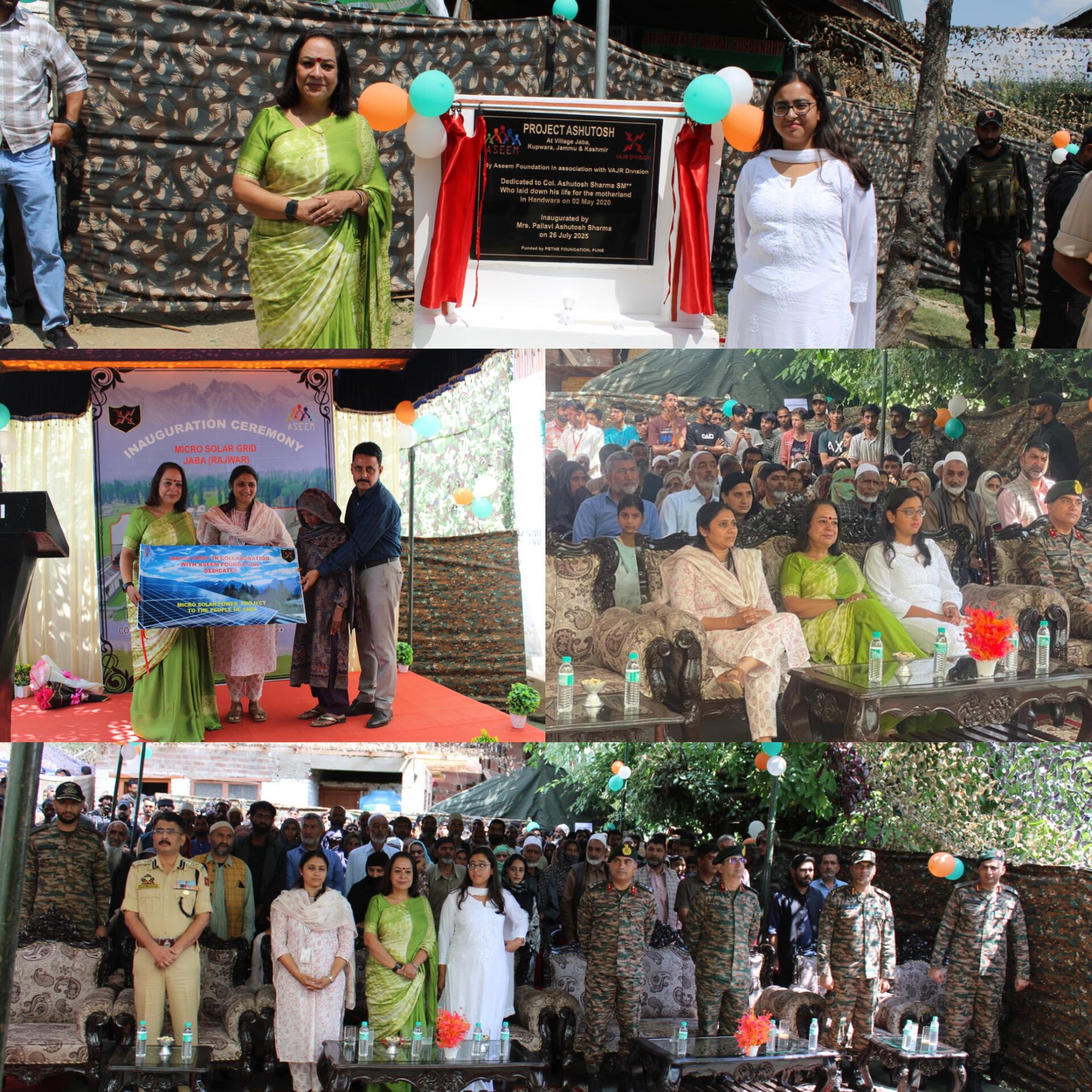
In a remarkable step toward rural empowerment, the Indian Army, in collaboration with the Pune-based ASEEM Foundation, has brought solar energy to Jaba, a remote village in the Kupwara district of Jammu and Kashmir.
This initiative marks the first time Jaba has received access to a reliable and eco-friendly power source. Until now, the village relied on an erratic electricity supply—available for only 3 to 4 hours a day—and many residents, struggling with poverty, were unable to afford even basic electricity tariffs. The new solar-powered infrastructure offers a sustainable solution, dramatically improving living conditions and enabling better access to education, healthcare, and livelihood opportunities.
The solar project was formally dedicated on Kargil Vijay Diwas by Mrs. Pallavi Ashutosh Sharma, in memory of her late husband, Colonel Ashutosh Sharma. The inauguration ceremony was attended by representatives from ASEEM Foundation, Panchayat leaders, and local villagers who welcomed the initiative with deep appreciation.
“For the people of Jaba, this is not just about electricity—it’s about dignity, opportunity, and hope,” said an ASEEM Foundation representative.
The day also featured a comprehensive outreach program spearheaded by the Indian Army to support the holistic development of the community:
Medical Camp: In collaboration with GMC Handwara, over 280 residents received free health check-ups, women’s healthcare services, and essential medicines.
Veterinary Camp: More than 120 cattle were examined by animal health experts who provided seasonal care and guidance to livestock owners.
Awareness and Skill Support:
ICDS promoted maternal and child health awareness.
The Agriculture Department introduced modern farming practices.
Fisheries officials encouraged fish farming as a source of livelihood.
The Animal Husbandry Department provided consultations to boost livestock management.
This coordinated effort underscores how partnerships between the Armed Forces, civil society organizations, and government departments can bring meaningful change to India’s most underserved and remote border regions.
For the residents of Jaba, this initiative signals the beginning of a brighter, more empowered future.